How Much Does Kitchen Cabinet Installation Cost in Massachusetts? (2026 Guide)
· By Wanderson Sarmento
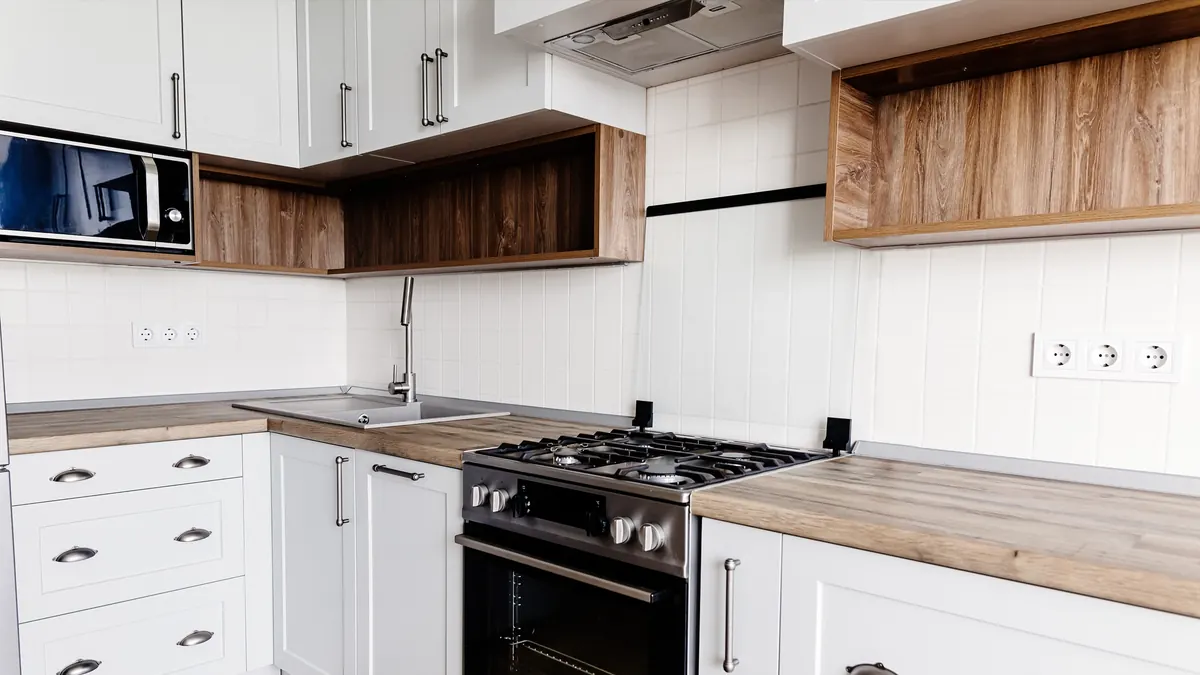
New cabinets change a kitchen more than almost any other upgrade. They are also where kitchen budgets most often go sideways, because the cabinet price is only part of the bill. Installation, removal, wall repairs and fit-up work all add up.
This guide walks through typical market costs for kitchen cabinet installation in Massachusetts in 2026, the difference between cabinet types, the hidden items common in older Boston-area homes, and how to plan a project that stays on budget.
Two costs: the cabinets and the installation
Every cabinet project has two separate price tags. The first is the cabinets themselves. The second is the labor to remove the old ones, prepare the walls and floor, and set, level and secure the new boxes.
Homeowners often price cabinets at a big-box store or online and are surprised by the labor quote. Others buy flat-pack cabinets to save money and then need someone to assemble them first. Knowing both numbers up front avoids that surprise.
Typical cabinet installation costs in the Boston area
These are rough market ranges and can vary widely with kitchen size, layout and the condition of your walls. Labor to install cabinets in Greater Boston commonly runs about $100 to $300 per cabinet box, depending on size, type and complexity.
For a typical kitchen with 15 to 25 boxes, installation labor alone often lands somewhere between $2,500 and $7,000. Large kitchens, tall pantry units, islands and custom fillers push it higher.
Assembly of ready-to-assemble (flat-pack) cabinets is usually an added charge, often $50 to $150 per box.
Removing and disposing of old cabinets commonly adds a few hundred dollars to $1,500, depending on how much needs to come out and whether countertops are removed at the same time.
What the cabinets themselves typically cost
Stock cabinets come in fixed sizes and finishes. For an average Massachusetts kitchen, they often run roughly $5,000 to $15,000.
Semi-custom cabinets offer more sizes, finishes and storage options. Many homeowners spend around $12,000 to $35,000 for a full kitchen.
Custom cabinets are built to your exact space and typically start around $30,000, with no real ceiling.
Your choice also changes installation time. Stock and flat-pack lines often need more fillers, shimming and adjustment to fit an older room, while custom boxes are built to fit but can be heavier and more complex to set.
Hidden costs in older Massachusetts kitchens
Walls that are not straight. In homes built from 1890 to 1930, common across Chelsea, Malden, Everett and Dorchester, plaster walls bow and corners are rarely square. Installers scribe, shim and add fillers so the cabinets look straight even when the room is not.
Uneven floors. Base cabinets must be level for countertops to sit right. Sloped floors in triple-deckers can mean extra shimming or leveling the base first.
Wall repair after removal. Taking out old cabinets often reveals damaged plaster, old tile backsplash, or holes from previous plumbing. Drywall patching and paint add to the bill.
Plumbing and electrical changes. Moving a sink, adding under-cabinet lighting or new outlets usually requires licensed trades and permits in Massachusetts. Keeping the same layout is the single biggest way to save.
Lead-safe work. In pre-1978 homes, removing painted cabinets and trim can disturb lead paint, which brings EPA lead-safe work practices into play.
Countertops, backsplash and hardware: plan the sequence
Cabinets go in first, then countertops are templated and installed, then the backsplash, then plumbing and appliance hookups. Stone countertops usually take one to three weeks from template to install, so plan to live without a working sink for part of that time.
Appliance sizes should be final before cabinets are ordered. A refrigerator that is an inch too deep or a range that needs a different gap can force cabinet changes late in the project, which costs both time and money.
Hardware is a small but real line item. Installing knobs and pulls on a full kitchen can take several hours, and a good installer uses a jig so every pull lines up.
If you want crown molding, light rail, panels on the island, or appliance panels, ask that they be included in the quote. These finishing pieces are where a kitchen looks custom or looks cheap.
How to keep your cabinet project on budget
Keep the layout. Replacing cabinets in the same footprint avoids moving plumbing, gas and electrical, which is often where costs climb fastest.
Order early and check every box. Damaged or missing cabinets can stall a project for weeks. Inspect the delivery before the old kitchen is torn out.
Measure twice, with your installer. Many costly mistakes come from ordering cabinets before an installer has checked the walls, the window trim and the appliance sizes.
Leave room for surprises. Setting aside 10 to 15 percent of the budget as a contingency is common practice, especially in homes more than 80 years old where walls hide old wiring, pipes or water damage.
Think about the cleanup. Cabinet work creates sawdust and debris throughout the house. Ask whether daily cleanup and a final post-construction cleaning are part of the job, so you get a kitchen that is ready to cook in.
Consider refacing or painting. If your boxes are solid, refacing or painting can cost far less than replacement and avoids most demolition.
Questions to ask before you hire an installer
Is assembly included, and is removal and disposal included? Who handles countertop coordination? What happens if a cabinet arrives damaged?
In Massachusetts, contractors working on existing owner-occupied one to four unit homes generally need to be registered under the Home Improvement Contractor program. Ask for proof of insurance and get a written contract with the scope, timeline and payment terms.
WS Construction and Remodeling assembles and installs kitchen and bath cabinets across Greater Boston, and the estimate visit is free. Text us on WhatsApp or call (857) 326-0243 to get a free estimate.
Frequently asked questions
- How long does kitchen cabinet installation take?
- For an average kitchen, installing cabinets usually takes two to five days once the old cabinets are out and the walls are ready. Flat-pack assembly, islands and custom trim add time.
- Can I buy my own cabinets and hire someone to install them?
- Yes, and many homeowners do. Make sure your installer sees the space and the cabinet order before delivery so sizes, fillers and appliance clearances are confirmed.
- Do I need a permit to replace kitchen cabinets in Massachusetts?
- Swapping cabinets in the same layout often does not need a permit, but plumbing, electrical and structural changes generally do. Requirements vary by town, so check with your local building department.
- Is it cheaper to reface or replace kitchen cabinets?
- Refacing is usually cheaper when the existing boxes are solid and the layout works. Replacement makes sense if boxes are damaged, the layout is changing, or you want more storage.
- Should countertops be installed before or after cabinets?
- After. Cabinets must be installed and leveled first, then countertops are measured and installed on top of them.
Related services
Found this helpful? Make us a preferred source on Google.
Ready for an exact price?
Get a free, no-pressure in-home estimate. Real numbers for your home, not a phone guess.